



Understanding Gout
Gout is usually caused by high levels of uric acid in the blood. Uric acid is a waste product created from the breakdown of purines, natural substances found in various foods and also produced within the body.
Uric acid in the blood is normally excreted through our urine. However, when excess uric acid cannot be excreted properly from the body, it may accumulate and form uric acid crystals. These crystals can then settle in your joints, leading to painful gout attacks. Excess uric acid may also deposit in your urinary tract, potentially causing uncomfortable stones.
HIGH LEVELS OF URIC ACID IN THE BODY CAN POTENTIALLY INCREASE THE RISK OF GETTING GOUT OR URIC ACID STONES (KIDNEY STONES)
Where gout crystals commonly form
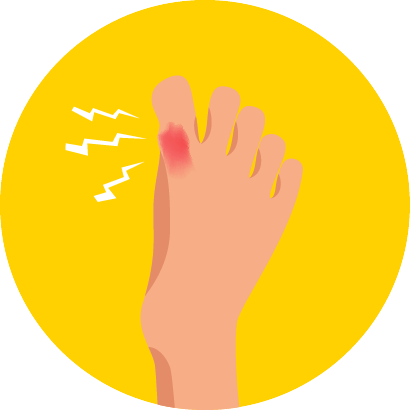
Big toe
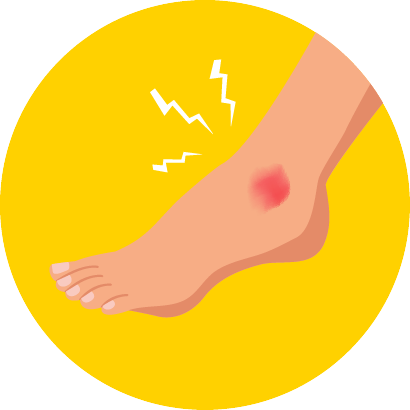
Ankle
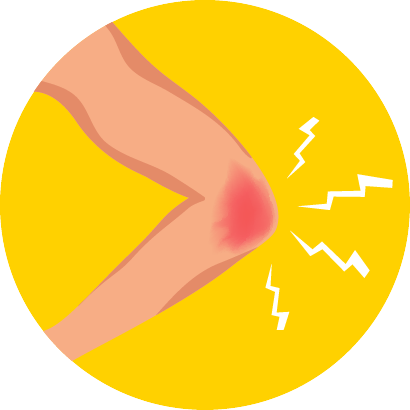
Elbow
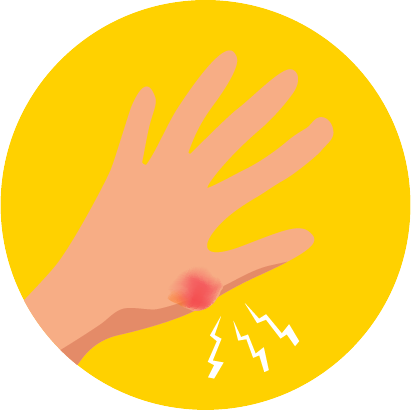
Finger
Gout symptoms may come and go. During gout attacks, the affected joints may experience the following symptoms:1
- Severe pain
- Swelling
- Redness
- Tenderness
- Burning sensation